Silicone or EPDM? The choice starts with the application, not the material
"For this application, should I choose silicone or EPDM?"
It is one of the most common questions engineers and product designers ask when developing technical components.
The answer, however, is rarely straightforward.
In industrial engineering, there is no material that is universally better than another. There is only the material that is best suited for a specific application.
Every component is designed to operate under different conditions: high or low temperatures, exposure to weather, contact with chemicals, compliance with industry regulations, or long-term durability.
That is where the selection process begins.
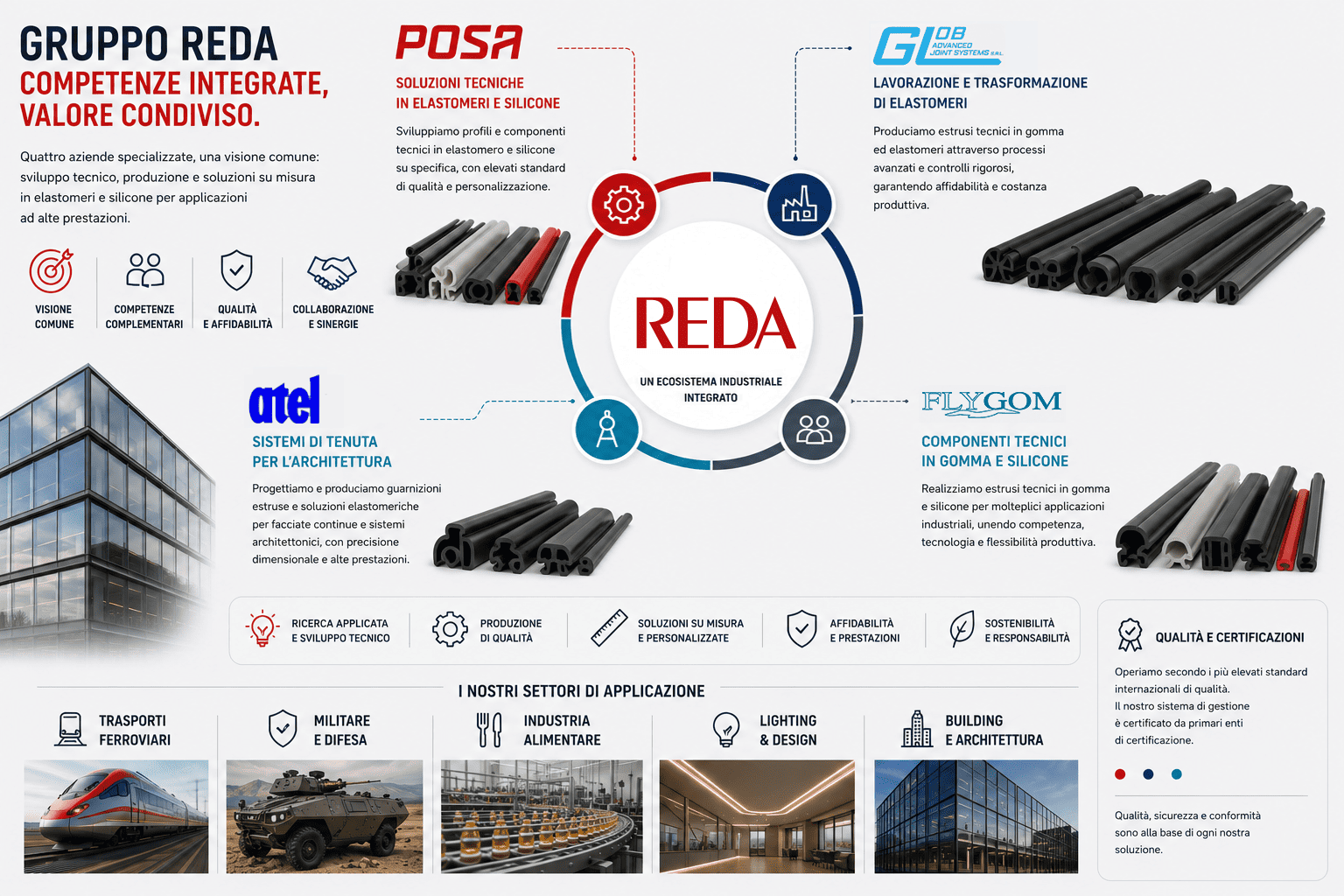
Within the Gruppo Reda companies—POSA, ATEL, Glob, and Flygom—the choice of material is one of the very first stages in developing a custom solution, because it directly affects the reliability, performance, and service life of the final component.
Silicone: when stability and versatility matter
Silicone is one of the most versatile elastomers available today.
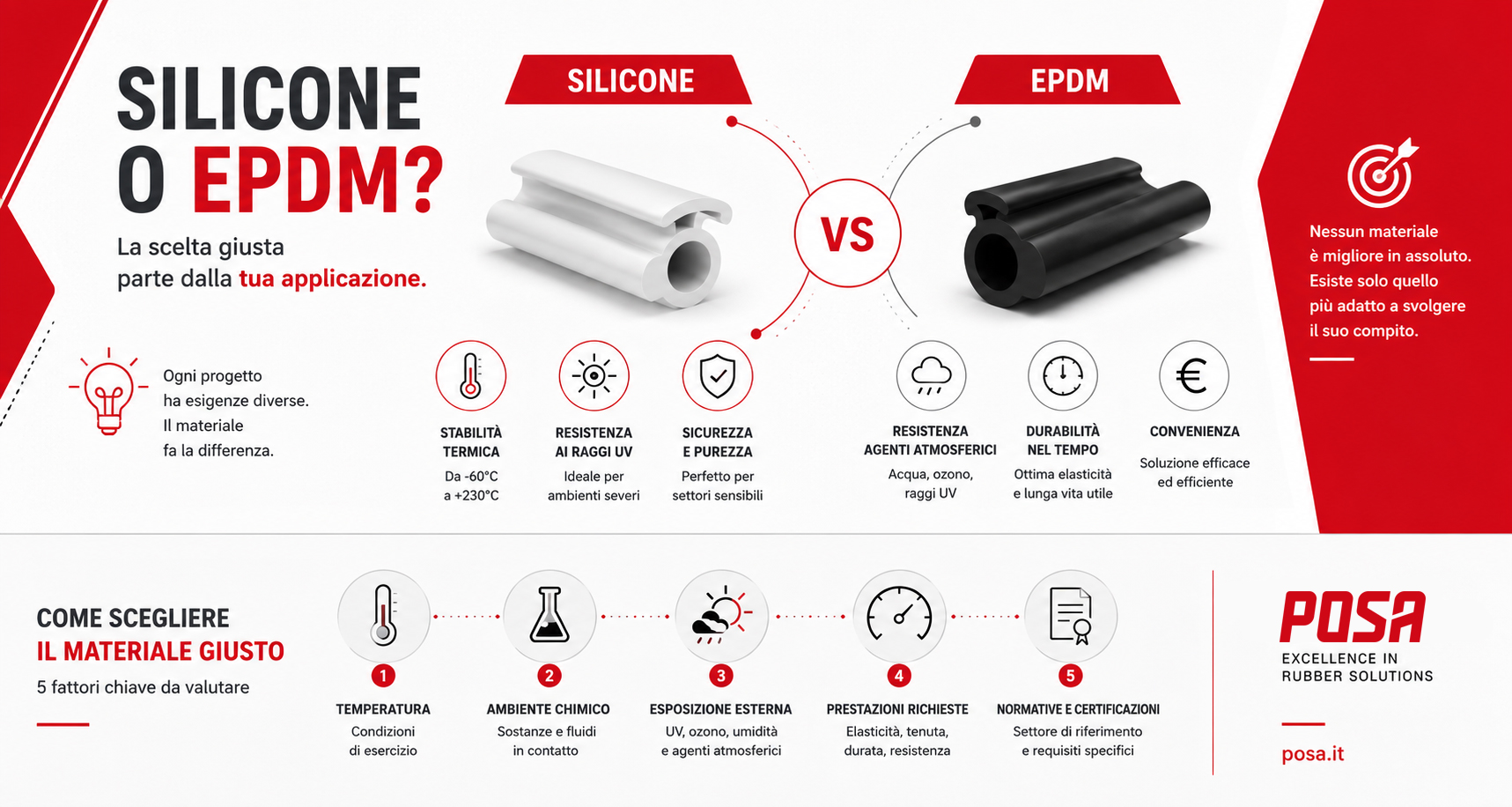
It maintains its elasticity and performance across a wide temperature range, offers excellent resistance to UV radiation, ageing, and weathering, and is available in formulations suitable for food-grade, pharmaceutical, and lighting applications.
For these reasons, silicone is often selected when a component must deliver consistent performance under demanding conditions or when purity, stability, and long-term reliability are essential.
EPDM: the ideal choice for outdoor applications
EPDM, on the other hand, is the preferred material when components are exposed to outdoor environments or continuously subjected to water, ozone, and changing weather conditions.
It is widely used in the building industry, infrastructure, transportation, and many industrial applications thanks to its outstanding weather resistance and excellent balance between performance, durability, and cost-effectiveness.
For many projects, EPDM represents the most efficient technical and economic solution.
The real difference lies in the engineering approach
Choosing between silicone and EPDM is never simply a matter of comparing material properties.
It starts with understanding the application.
Operating temperature, working environment, expected service life, regulatory requirements, component geometry, and manufacturing process all influence the final decision.
That is why every project requires a dedicated technical assessment.
The objective is not to identify the "best" material, but the one that will enable the component to perform reliably throughout its entire life cycle. Silicon or EPDM?
From concept to custom solution
More and more companies are looking for engineering partners rather than simple component suppliers.
This is where design expertise, material knowledge, and manufacturing capabilities come together.
Through a co-engineering approach, it is possible to optimize materials, geometries, and technical performance according to the specific requirements of each application.
This is the approach that allows POSA, ATEL, Glob, and Flygom to transform a technical requirement into a fully customized industrial solution.
Frequently Asked Questions
What is the main difference between silicone and EPDM?
Silicone is particularly suitable for applications requiring excellent thermal stability, UV resistance, and consistent long-term performance. EPDM excels in weather resistance, water resistance, and ozone resistance, making it ideal for outdoor applications.
When should silicone be used?
Silicone is the preferred choice when components must operate at very high or very low temperatures, or when they are intended for industries such as food processing, pharmaceuticals, lighting, or other applications requiring high-performance elastomers.
Which applications are best suited for EPDM?
EPDM is commonly used in building systems, infrastructure, transportation, and industrial applications where weather resistance, durability, and long service life are essential.
Is silicone always better than EPDM?
No. The right choice depends entirely on the application. Operating conditions, environmental exposure, performance requirements, service life, and regulatory constraints all determine which material is most suitable.
How do you select the right material for a technical component?
Material selection begins with a detailed analysis of the application. By evaluating all operating conditions and performance requirements, engineers can identify the elastomer best suited to the project.
Why is it important to involve a technical partner from the early design stages?
Early collaboration allows engineers to optimize materials, component geometry, and manufacturing processes, reducing development time, minimizing production risks, and improving the overall performance of the final product.